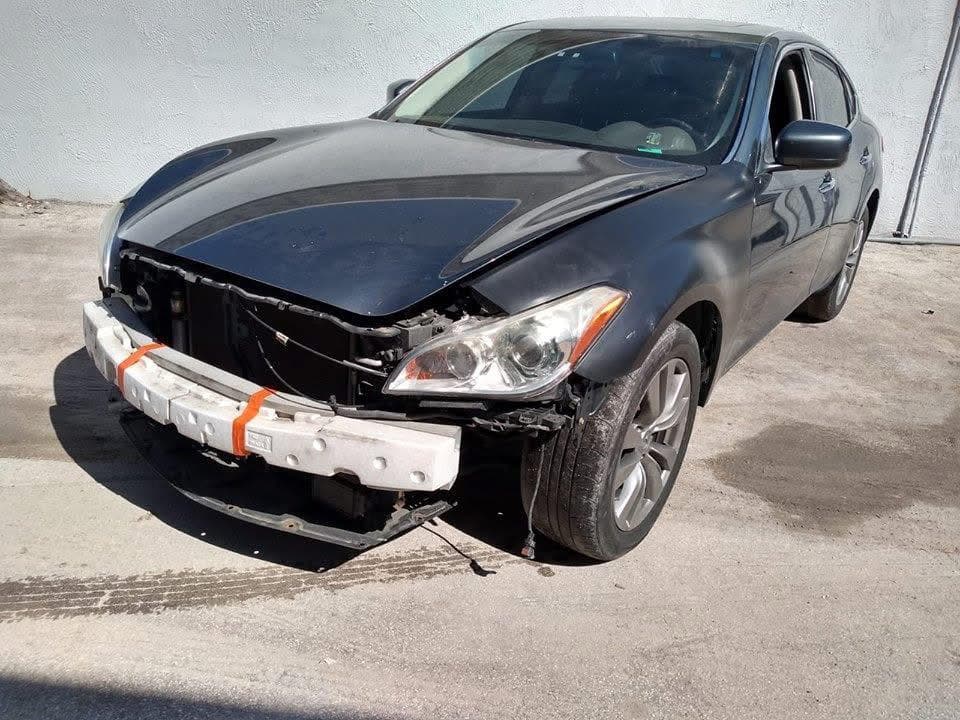
What To Do After a Car Accident in Orlando: A Step-by-Step Guide
Getting rear-ended on I-4 at 5:30 on a Friday is its own special kind of awful. So is getting clipped pulling out of the Publix lot on Orange Ave. Doesn't much matter where it happens. Your heart's pounding, your hands shake a little, and your brain goes blank right when you need it most.
We see the aftermath every week here in Orlando. Crumpled bumpers. Blown airbags. People who did everything right, and people who froze and forgot half of it. This is the stuff we wish every driver knew before they ever needed it. Save it. Screenshot it. Send it to your kid who just got their license last month. Here's what to do, in order.
What should I do in the first 60 seconds after a crash?
Breathe first. Then check yourself and anyone else in your car before you touch anything else. Pain hides under adrenaline, so move slow and pay attention to your neck and back.
Can you move, and are the cars still drivable? Get them out of traffic. Florida's "Move Over" rules and the fender-bender statute actually want you clearing the lane when nobody's hurt. A minor scrape on the 408 or I-4 turns deadly fast when people sit in a live lane waiting for an officer. Pull onto the shoulder or into a nearby lot. Cut the engine. Flip on your hazards.
If the cars can't move, or somebody's hurt, leave everything exactly where it sits and get yourselves behind a guardrail or off the pavement. Cars are replaceable. You're not.
One thing people forget in our heat: a shut-up car after a wreck gets brutal in about three minutes. Got kids in the back, or a dog? Get them out and into shade or AC.
When do I need to call the police in Orlando?
Call 911 if anyone's hurt, if a car is blocking traffic, if the other driver seems drunk or aggressive, or if they're trying to take off. That last one happens more than you'd think around here. Grab a tag number even if you get nothing else.
For everything else, Florida still wants a report on any crash with an injury, a death, or damage that looks like $500 or more. Think about how cheap a single bumper cover is to blow past that number. Almost every real collision clears the bar. So call the non-emergency line (the Orlando PD non-emergency number is 321-235-5300) and ask for an officer.
A responding officer writes up a Florida Traffic Crash Report. That report number is gold later. It logs who was where, who got cited, and it moves your insurance claim and your repair right along. If police genuinely won't come out for a minor no-injury fender-bender, you've got 10 days to self-report to the Florida DMV. Get that crash report when you can, though.
While you wait, stay off the road. Orlando drivers do not slow down for a wreck. I've watched it on Colonial a hundred times. Stand off to the side.
What photos and information should I get?
Your phone is the best tool you've got right now. Shoot way more pictures than you think you need. You can always delete the extras later.
Here's what to capture:
- Wide shots showing both cars and how they ended up against each other and the road
- Close-ups of every dent, scrape, and broken piece on both vehicles
- The other car's plate, plus their insurance card and license (snap a photo, don't copy it down wrong by hand)
- Skid marks, broken glass, fluid on the road, a downed sign, the traffic light you were sitting under
- A street sign or landmark so you remember the exact spot
Get the other driver's name, phone, insurance company, and policy number. Passenger in their car? Note that too. And if somebody pulled over to help and actually saw it happen, get a name and number before they drive off. A neutral witness can settle a "he said, she said" mess weeks later.
Honest tip from the shop side. Photograph the damage in good light if you can, and grab the VIN if the other car's at fault and you'll be dealing with their insurer. It speeds up the estimate on our end.
How should I deal with the other driver?
Be civil. Be quick. Swap info and that's about it.
Don't argue about who caused it. Don't blurt out "I'm so sorry, that was totally my fault," even if you're the type who apologizes for everything. In Florida that can get treated as admitting fault, and fault gets sorted later by adjusters and the crash report, not by the two of you standing on Curry Ford Road. A simple "you okay?" covers it.
Don't take cash to skip insurance, no matter how reasonable they sound. We've watched that go sideways too many times. The "it's just a scratch" turns into a bent frame rail nobody could see from the curb, and now there's no claim and no paper trail. Somebody wants to keep it off the record? That's usually your sign to put it on the record.
And don't let anyone talk you into following them to "their guy's shop" right then and there. You pick where your car goes. More on that in a second.
Who do I call first, and in what order?
Once everyone's safe and you've got the info, here's the order that actually works.
Call your own insurance company first. Yes, even if the other driver ran the light at Mills and Colonial. Florida's a no-fault state, so your own Personal Injury Protection coverage (PIP, up to $10,000) covers your early medical bills no matter who hit who. Reporting fast protects you and gets your claim number going. Have those photos ready.
Then think about a doctor. This is the step people regret skipping. Florida's 14-day rule means you've got two weeks to be seen if you want your PIP medical benefits. Whiplash and soft-tissue stuff loves to show up on day three, after the adrenaline wears off and you wake up feeling like you got hit by a truck (which, sometimes, you did). Get checked even if you feel fine. Blow past 14 days and that coverage can vanish.
Then call the shop you trust. That's where we come in, but the principle holds no matter who you use. You choose your repair shop, not the insurance company. They can recommend a "direct repair" place. They can lean on you. They cannot force you. Florida law is plain about that.
When you call us, you don't need the claim figured out yet. Tell us what happened, text over a few of those photos, and we'll work straight with whichever adjuster is footing the bill. GEICO, State Farm, Progressive, USAA, the regional ones, we deal with all of them. We'll give you a free written estimate, tear the car down to find the hidden damage adjusters miss on a quick walk-around, and tell you straight whether it's a two-day fix or a three-week job. We back the work with a lifetime workmanship warranty, and nothing starts without your okay.
What if the car can't be driven?
Leaking fluid? Airbags blew? A wheel sitting cockeyed, or a headlight smashed out? Don't drive it. A dragging bumper can rip loose at 50 on the Beachline, and a busted taillight is a ticket waiting to happen once it's dark.
Get it towed somewhere safe. You can have it brought to your house, or call us and we'll help you get it here and start the estimate. Whatever you do, don't authorize some random tow company to haul it to a storage yard you've never heard of where the daily fees stack up to hundreds before you even know where it went. We untangle that one for folks all the time, and it's a pain.
A wreck is a rotten day. The repair part doesn't have to be. Keep your photos. Keep your crash report number. See a doctor inside two weeks. Then let the shop and the adjuster do the back-and-forth while you get on with your life.
Driving around Orlando, Conway, Belle Isle, or Lake Nona and staring at a banged-up car right now? Text us a couple of pictures and we'll tell you what you're looking at. No charge, no pressure.
Quick answers
Do I have to call the police after a car accident in Orlando?
Florida law says you have to report a crash that causes an injury, a death, or property damage that looks like $500 or more. On any real collision in Orlando, that's basically all of them. So call. Dial 911 if anyone's hurt. If it's a tiny parking-lot tap with no injuries and clearly under $500 in damage, an officer might not roll out, and you can file a self-report with the DMV within 10 days. Not sure? Call anyway. The crash report number makes your insurance claim go a lot smoother.
Should I call my insurance company or the other driver's?
Call your own first, even if the other driver caused it. Florida is a no-fault state. Your own PIP coverage (up to $10,000) handles your early medical bills no matter who was at fault. Reporting fast to your own insurer protects you. You can still go after the at-fault driver's property-damage coverage for your car repairs, and a body shop like ours deals with whichever adjuster is paying. You don't have to figure out fault on the roadside.
Does my insurance company get to pick the repair shop?
No. Florida law gives you the right to choose your own shop. An adjuster can suggest a 'preferred' or 'direct repair' shop, and some of them push pretty hard, but they can't require it. Pick the shop you trust and tell the adjuster where the car is headed. We work with every carrier and deal with the adjuster directly either way.
How long do I have to see a doctor after a crash in Florida?
Fourteen days. To use your PIP medical benefits in Florida, you generally have to be seen by a doctor within 14 days of the accident. Adrenaline hides whiplash and soft-tissue injuries for a day or two, so don't tough it out. Get checked even if you feel fine. Miss that window and you can lose your PIP medical coverage entirely.