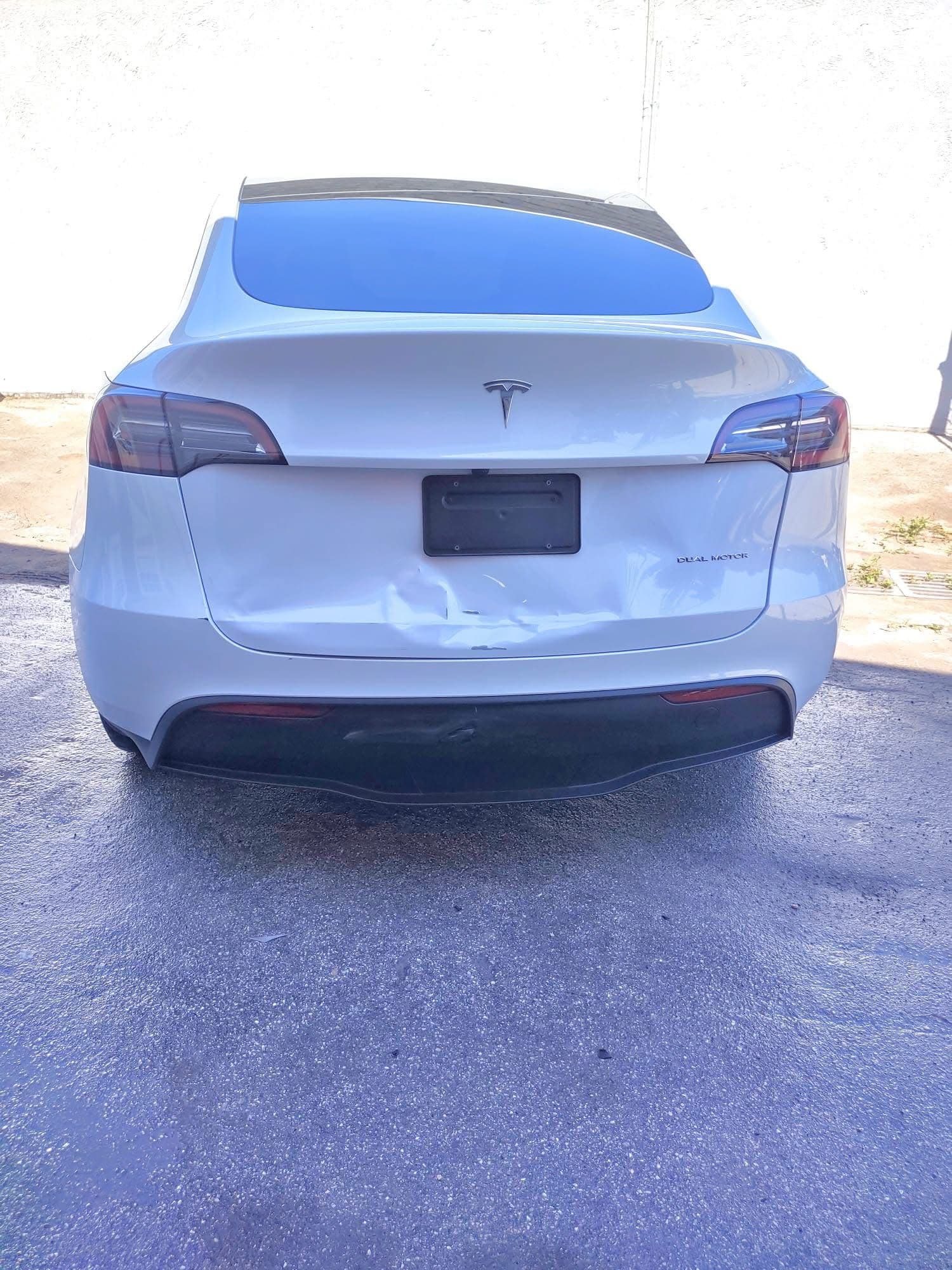
Somebody calls the shop, reads me their estimate over the phone, and gets stuck on three letters. OEM. Then they hit a line that says "aftermarket bumper cover" or "recycled quarter panel" and they want to know if their insurance company is trying to pull a fast one. Fair question. The honest answer is more interesting than yes or no.
There are three kinds of parts that can land on your car after a wreck. Each one has a place. The trick is knowing which part belongs where, because an insurer's default isn't always the right call for the part you're actually replacing. Let me walk you through it the way I would at the counter.
What's the actual difference between OEM, aftermarket, and used parts?
OEM stands for Original Equipment Manufacturer. It's the exact same part your car rolled off the line with, made by or for the automaker, in the automaker's box. A Toyota OEM fender comes from Toyota. It fits the way the factory part fit, because it is the factory part.
Aftermarket parts get made by other companies that aren't the automaker. They reverse-engineer the part and produce a copy. Quality runs all over the place here. Some aftermarket parts are excellent and carry a CAPA certification (that's the Certified Automotive Parts Association, an outfit that tests fit and materials). Others are loose, thin, and a headache to bolt on. Florida law actually requires that a non-OEM part show the maker's name or logo stamped on it, so you can see what you've got.
Used parts are real OEM parts pulled off another vehicle, usually one that got totaled for something unrelated. You'll see these called LKQ (like kind and quality) or recycled or salvage parts. A used factory door from a clean donor car can be a genuinely good deal. The fit is OEM because it is OEM, just with some miles on it.
So three buckets. New original, new copy, used original. Got it? Now here's where it matters.
Does the kind of part change fit and safety?
Yes, and this is the part people skip right past.
For a lot of cosmetic pieces, an aftermarket part is fine. A bumper cover, a piece of trim, a plastic grille. If it fits clean and takes paint right, your neighbor will never know. We use them all the time when it makes sense, and you save money.
Structural and safety parts are a different animal. I'm talking about the stuff that's engineered to crumple a certain way, absorb a hit, and keep the cabin around you intact. Crash bars behind the bumper. Frame components. Brackets that hold a sensor in exactly the right spot. Modern cars are designed down to the millimeter so the body folds where it's supposed to and the airbags fire when they're supposed to. An aftermarket copy that's a hair off, made from steel that's a touch softer, can change how that whole system behaves in the next collision. You won't see it. You'll feel it at the worst possible moment.
Here's a real one. We had a Civic come in last year wearing an aftermarket bumper reinforcement from a prior repair somewhere else. The radar sensor for the collision-avoidance system mounts to that bar. The copy bar had the mounting tab in slightly the wrong place, and the sensor was aimed a couple degrees off. The car's auto-braking was reading the road wrong. That's not a paint problem. That's a part that should've been OEM and wasn't.
Used OEM parts dodge most of that, because they're genuine factory pieces. The catch is the part's own history. A used quarter panel from a car that got rear-ended might be straight up front and tweaked in back. We inspect every used part before it goes anywhere near your car. If it's bent, rusty, or just tired, it goes back on the truck.
What do insurers prefer, and why?
Cost. That's the whole story, and I'm not even mad about it.
Insurance companies prefer aftermarket and used parts because they're cheaper than OEM, which lowers what they pay on your claim. An aftermarket hood might run half what the OEM hood costs. Multiply that across millions of repairs a year and you see why it's baked into how they write estimates. It is completely legal, and on the right part it's a reasonable way to keep everybody's premiums from going through the roof.
The friction shows up when the cheaper part gets specced on a part that really shouldn't be cheap. A safety bracket. A part on a car that's two years old and still under factory warranty, where the automaker wants their own parts used. That's when a shop that knows what it's doing flags it, writes the OEM part into the estimate, and explains why. Most of the time the adjuster approves it once we show our reasoning. Sometimes there's a back-and-forth. That's normal. That's what supplements are for.
I'll say this plainly. A good shop is on your side here, and a network shop that answers to the carrier sometimes isn't. When the place fixing your car is getting graded by the same company trying to hold down the parts bill, guess which way the close calls tend to break.
Do I have the right to request OEM parts in Florida?
You have rights, and you have leverage, but there's no single magic sentence that forces OEM onto every claim. Let me give it to you straight instead of selling you a fantasy.
Florida statute 626.9738 covers non-OEM parts. The short version: if your insurer wants to use aftermarket parts, they have to disclose it on the estimate, and those parts have to be identified with the maker's name or logo. You're entitled to know exactly what's going on your car. No surprises hidden in the line items.
Beyond that, a few things tilt the table your way. Read your policy. Some include OEM parts coverage outright. Many don't by default, but you can add an OEM endorsement at renewal for a few bucks a month, and on a newer car that's money well spent. If your car is leased or financed, dig out the contract. Plenty of them require OEM parts to protect resale value, and that requirement can override the insurer's cheaper preference. If your car is new enough to still carry the factory warranty, the automaker's position on original parts gives you another lever to pull.
And you can always pay the difference yourself. If the insurer approves an aftermarket fender and you want OEM, you can cover the gap out of pocket. On a cosmetic part that's often not worth it. On something that matters to you, it might be.
The move is simple. Ask your adjuster, in writing, what parts are being used and whether OEM is available under your policy. Bring your car to a shop that'll tell you the truth about which parts are worth fighting for and which ones aren't.
So what should I actually do?
Don't treat all three part types as the same, because they're not, and don't treat your insurer as the enemy either, because cheaper parts in the right spots keep your rates sane.
Look at your estimate. Find the non-OEM lines (Florida law makes the insurer label them). Then ask one question about each: is this a part that just has to look right, or a part that has to perform in a crash? Cosmetic pieces, let the savings ride. Safety and structural pieces, push for OEM and put the request in writing.
Bring the car to us and we'll go through the estimate with you line by line. We work with every carrier in Orlando, and we write supplements for OEM parts when the repair calls for it. We'll never quietly slip a sketchy part on your car to make an adjuster happy, and everything we do carries a lifetime workmanship warranty. Free estimate, honest answer, and we'll tell you which parts are worth the fight and which ones aren't.
Quick answers
Can I demand OEM parts on a Florida insurance repair?
You can ask, and you have leverage, but a basic policy doesn't always guarantee it. Florida law (statute 626.9738) says if an aftermarket part gets used, it has to carry the manufacturer's name or logo so you know what's on your car, and the insurer has to disclose it on the estimate. Some policies include OEM coverage, and a lease or loan contract may flat out require original parts. Read your policy, ask your adjuster in writing, and if your car is newer or still has factory warranty, push. There's also an endorsement you can add at renewal that locks in OEM parts. Worth the few extra dollars a month on a newer car.
Are aftermarket parts unsafe?
Not automatically. A CAPA-certified aftermarket bumper cover on a ten-year-old commuter is usually fine. The concern is structural and safety pieces, like crash bars, airbag sensors, and anything tied to how the car folds in a wreck. Those are engineered to exact tolerances, and a copy that fits a little off can change how the car protects you. We'll tell you straight which parts are fine to save money on and which ones we won't cut corners on.
Will using a used part void my warranty or hurt resale?
A quality used OEM part (often called LKQ, like kind and quality) won't usually void anything, because it's a real factory part, just off another car. Resale is more about the repair being done right and documented. Where used parts get tricky is matching age and mileage, and making sure the part wasn't bent in its own accident. We inspect every used part before it goes on. If it's junk, we send it back.
Why does my insurer keep pushing aftermarket and used parts?
Cost, plain and simple. Aftermarket and used parts are cheaper than OEM, sometimes a lot cheaper, and that lowers what the carrier pays out on your claim. It's legal, and on the right part it's reasonable. The problem is when it gets applied to a part that really should be original. That's where you push back, and where a shop that writes a proper estimate earns its keep.