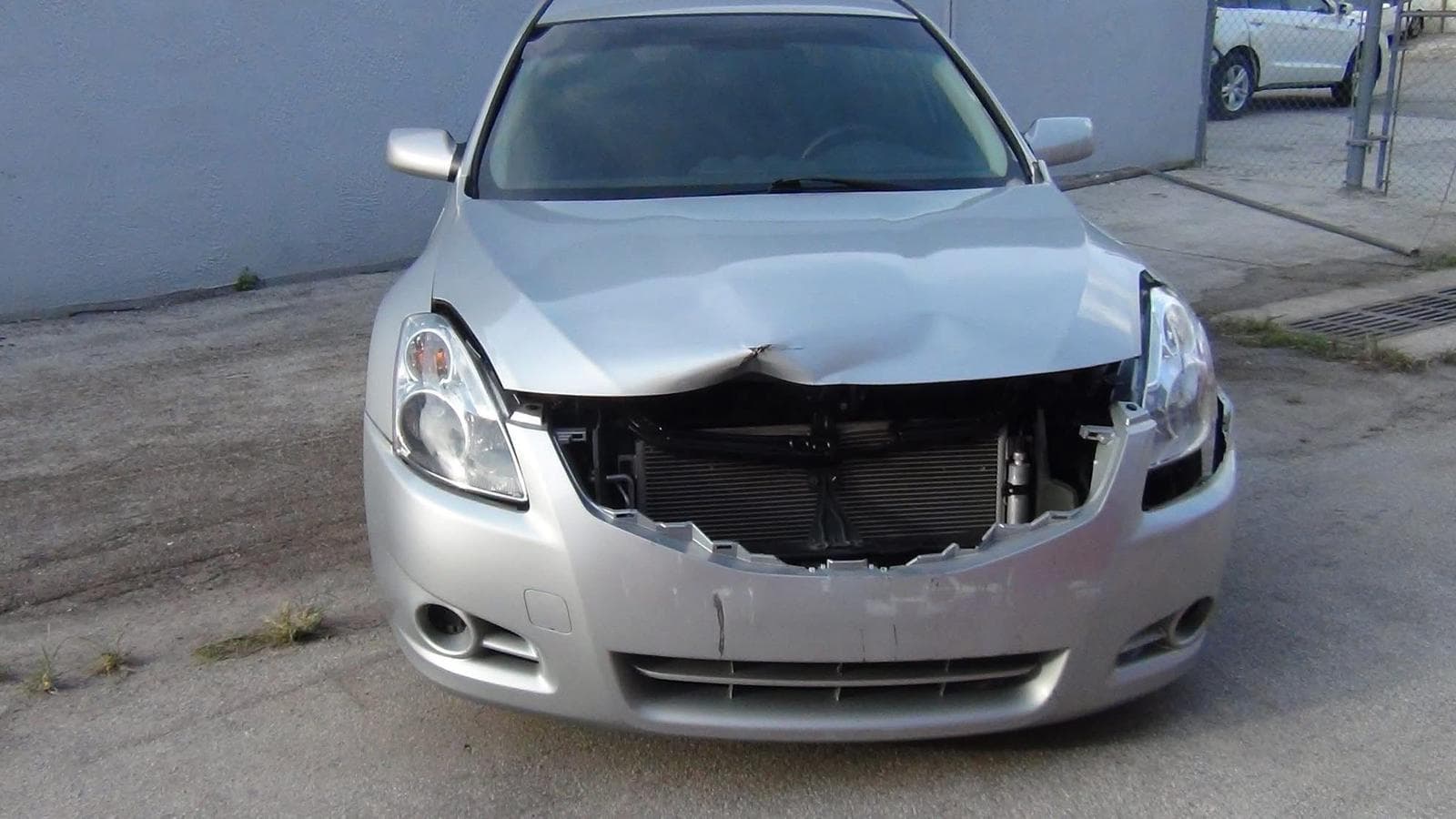
Hail and Storm Damage in Central Florida: What It Does to Your Car and What to Do Next
Most people around Orlando think hail is a Midwest thing. It isn't. We get it here too, usually buried inside one of those late-afternoon summer storms that boil up off the Gulf and turn the sky a weird green for fifteen minutes. You're parked at the Florida Mall. You run in for one thing. You come back to a hood that looks like somebody worked it over with a ball-peen hammer.
Florida ranks near the top of the country for severe thunderstorm activity. We're the lightning capital of the U.S., and the same storms that throw lightning can drop hail anywhere from pea-size to golf balls. June through September is the stretch to watch. Then hurricane season piles on, with outer bands flinging branches and wind-driven junk at your paint. That's a lot of ways for the weather to chew up a car you're still making payments on.
So here's the rundown. What hail and storm damage actually does, how the insurance side plays out, and why sitting on it is the worst call you can make.
What does hail actually do to a car?
Short version. More than it looks like.
From ten feet away, light hail looks like a handful of dimples on the hood and roof. Get down low, catch it in the sun, and suddenly they're everywhere. The roof. The trunk lid. The tops of the fenders. Even the flat middle of the doors. Hail beats up the horizontal panels worst because those are the surfaces aimed at the sky.
Here's the part folks miss. Hail doesn't just dent metal. On a hard hit it can crack or chip the clear coat, and once that top layer is broken, the Florida sun and humidity go to work underneath it. A dent you shrug off in July can turn into a rust spot by Christmas. We saw it on a guy's older F-150 a while back. He figured it was "just cosmetic," left it, and the bare metal started bubbling under the paint about four months later. Now it's a real job instead of a quick one.
Then there's glass. A windshield that caught a golf-ball-size stone can develop a star crack that creeps with the next temperature swing, and in our climate that swing happens every single day. Quick note: we don't do glass in-house. If your windshield's cracked, we'll send you to a good local glass shop and schedule the body work around it.
The dents themselves are usually the main event. Good news there. Most hail dents have no paint break, and when that's the case we can often handle them with paintless dent repair. PDR means we work the metal back from behind the panel with specialized rods. No filler. No repaint. It keeps your factory paint, which matters a lot for resale, and it's almost always cheaper and quicker than cutting into conventional bodywork.
Is hail damage a comprehensive or collision claim?
This one trips people up constantly, so here's the plain answer. Hail is comprehensive. So is wind, a fallen branch, flooding, a tree limb on the roof, basically anything that isn't you hitting another object.
Collision is for, well, collisions. You back into a pole. Somebody rear-ends you on I-4. You clip a curb on the way out of the parking garage. That's collision coverage.
Why does the difference matter? A couple of reasons. A comprehensive claim for hail usually won't push your rates the way an at-fault crash can, because you didn't do anything wrong. A storm did. Your deductibles can also be different. Plenty of Florida policies carry a separate, sometimes higher, deductible for comprehensive or for weather events specifically. Pull up your declarations page before you assume you know your number.
One more thing worth saying out loud. If you only carry liability, which is the Florida state minimum, you've got zero coverage for hail. Comprehensive is the optional piece. Financed or leased the car? Your lender almost certainly makes you carry it, so you're probably fine. Own it outright and dropped full coverage to save a few bucks a month? You might be buying that hood yourself. Better to know that before storm season than after.
We work with every major carrier in town. State Farm, GEICO, Progressive, Allstate, USAA, all of them. And you get to pick who fixes your car, not the insurance company. Florida law backs you up on that, so don't let an adjuster steer you somewhere you didn't choose.
Could hail total my car?
Yep. And it catches people off guard every season.
An insurer "totals" a vehicle when the repair cost crosses a percentage of the car's actual cash value. Florida's threshold is 80 percent. So say your car is worth $9,000 and a nasty hailstorm racks up $7,500 in dents across every panel. You're close enough that the carrier may call it a total loss and write you a check instead of fixing it.
Hail does this more than you'd guess, because the damage is spread out. A fender-bender hammers one corner. Hail hammers the entire top of the car at once. The repair count climbs fast when you're tallying dents on the roof, the hood, the trunk, both quarter panels, and the tops of all four doors. On an older vehicle with a lower value, even a moderate beating can tip it over the line.
If your car does get totaled, that's not the end of the conversation. You can sometimes push back on the actual cash value when the carrier lowballs you. And in Florida you may be able to keep the car as a salvage retention and still drive it once it's repaired and re-titled. Whether that's smart really depends on the car. Bring it in and we'll look it over and tell you straight whether it's worth saving or not.
Why does it matter how fast I get it looked at?
Because the clock works against you on more than one front.
The damage gets worse. Cracked clear coat plus Florida humidity equals corrosion, and corrosion turns a clean paintless dent job into a repaint-plus-rust-repair job. The longer bare metal sits exposed, the bigger your bill, even when insurance is footing it.
Claims have clocks too. Most policies want prompt notice, and after a big storm the carriers get slammed. File early and you're near the front of the line for an adjuster instead of the back. The last few rough summers, we watched adjuster waits stretch out for weeks once everybody filed at once. People who moved fast got seen first. Simple as that.
And honestly, an early estimate just tells you where you stand. You might be looking at a $600 PDR job. You might be sitting on a possible total loss. Those are wildly different decisions, and the sooner you know which one it is, the sooner you can plan around it.
Here's what I tell people. Take photos the day it happens, in good light, down low so the dents actually show. Write down the date and where you were parked. Call your carrier to open the claim, then bring the car by for a real estimate. You don't have to use the shop the insurance "recommends." You don't have to swallow the first number they toss at you either.
Our estimates are free, and we'll be honest about whether it's worth fixing, worth claiming, or worth just living with. Some light hail on a 12-year-old commuter isn't worth burning a deductible over. If that's your situation, we'll tell you.
If a storm got your car this season, swing by JMar and let us look before that little dent quietly becomes a rust problem. Every repair we do carries a lifetime workmanship warranty, so the fix holds up.
Quick answers
Will filing a hail claim raise my insurance rates?
Usually not the way an at-fault wreck would. Hail is a comprehensive claim. The damage came from a storm, not from something you did, and carriers treat that differently than collision. A bunch of comprehensive claims in a short window can still nudge your premium, though. So if it's light damage and close to your deductible, do the math first. Bring it by and we'll give you a free estimate so you know the real repair number before you decide to file anything.
Can paintless dent repair fix all hail damage?
A lot of it, yeah, as long as the paint isn't cracked or chipped right at the dent. PDR works by massaging the metal back into shape from behind the panel. No filler, no repaint. That keeps your factory finish and it costs less. Where the clear coat is split, or a dent lands on a sharp body line, or it's just too deep, we switch to conventional bodywork and refinishing. We'll tell you which way your car needs to go once we get it under the lights.
How long does hail damage repair take in Orlando?
Depends on how widespread it is and how the parts and insurance approval line up. A light PDR job on a couple of panels might be a day or two. A car that got peppered across every horizontal surface, or one that needs repaint and new parts, runs longer. After a big regional storm, expect everything to slow down. Every shop and adjuster in Central Florida is buried at the same time. That's one more reason to get in early.
My windshield cracked in the storm. Do you fix glass too?
We don't do glass in-house. But we'll point you to a reliable local glass shop and coordinate the timing so the body work and the windshield happen in the right order. Glass is usually its own comprehensive claim. Sometimes there's no deductible at all for a windshield under Florida policies, so ask your carrier about that part specifically.