What Is ADAS Calibration, and Why Your Car Needs It After a Wreck
Your car has been watching the road for you, and you probably never thought twice about it. The little camera up by the rearview mirror. The radar tucked behind the front emblem. The sensors in the corners of your bumpers. They sit there quietly aiming at the lane lines and the car ahead, ready to yank the wheel or stomp the brakes a fraction of a second before you would. That whole web of helpers has a name. ADAS. Advanced Driver Assistance Systems.
Here in Orlando we see what happens to those systems after a collision, and most folks have no idea any of it exists until we explain it at the counter. So let's walk through it. What ADAS actually is, why a wreck throws it off, what goes wrong when a shop ignores it, and how we handle it without shipping your car across town.
What is ADAS, and which parts of my car use it?
ADAS is the catchall term for the safety tech that helps you drive. You know these features even if you never knew the acronym. Lane keep assist that nudges you back when you drift. Automatic emergency braking that hits the brakes if you don't. Adaptive cruise control that keeps a set gap from the car in front. Blind spot warning. Backup cameras with cross-traffic alerts. Parking sensors that beep faster as you get close.
All of that runs on hardware bolted to your car at very specific angles. A forward-facing camera mounted right behind the windshield glass. Radar units behind the front grille and inside the rear bumper. Cameras in the side mirrors. Ultrasonic sensors poking through the bumper covers. Each one is aimed at a precise spot, measured down to fractions of a degree, because the computer reads the road based on exactly where it thinks those eyes are pointed.
If your car is a 2018 or newer, you almost certainly have several of these. By 2022 automatic emergency braking became near universal on new cars sold in the US. Pickups, sedans, the family SUV, doesn't matter. The tech is everywhere now, and it's only getting denser.
Why does my car need calibration after a collision?
Calibration means re-aiming those sensors so the car knows the truth about where they're pointed. After any decent hit, that aim gets thrown off, and the computer keeps trusting the old numbers.
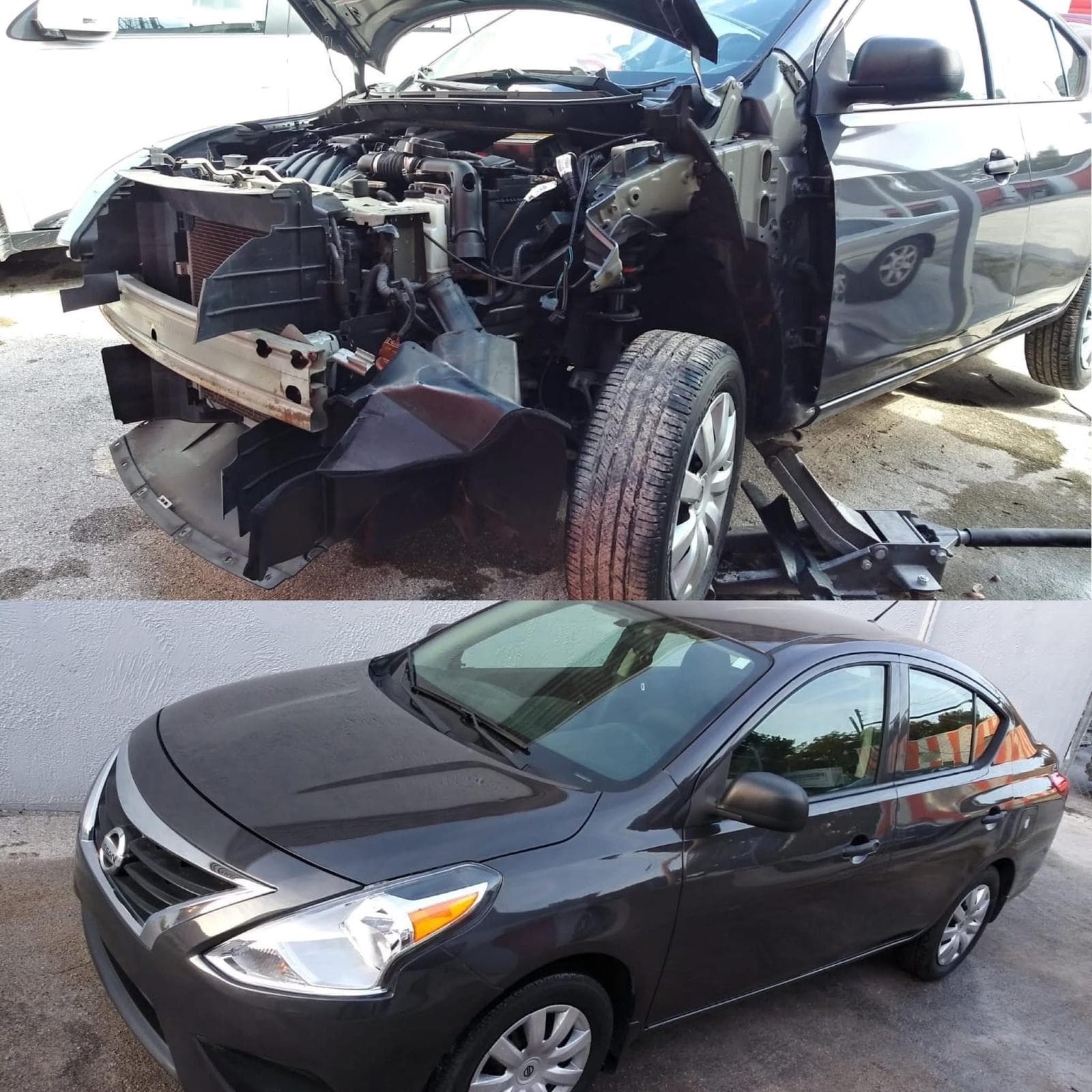
Think about the windshield camera. It's calibrated to look at the road from one exact height and angle. Now picture a front-end collision. The bumper takes the blow, the hood crumples a little, maybe the radar bracket bends a few degrees. Everything looks straight again once we hammer it out and bolt on new parts. But "looks straight" and "aimed correctly" are two different things. A radar sensor that's off by even a couple of degrees is now reading a car in the next lane as a car in yours.
It's not only the obvious wrecks either. Things that knock ADAS out of calibration include a windshield replacement (the camera comes off the glass), a bumper that gets removed and reinstalled, a wheel alignment, a suspension repair, or a fender that gets pulled and repainted. Plenty of repairs that have nothing to do with the camera still require recalibrating it, because the carmaker says so in their repair procedures. We follow those procedures to the letter. They exist for a reason.
Here's a real one. Couple months back a woman brought us a 2020 CR-V after a parking-lot tap crunched the front bumper. Minor, she figured. We pulled the cover and the radar bracket behind it was tweaked. Looked fine to the eye. The scan said otherwise. Had we just swapped the cover and handed it back, her adaptive cruise would've been measuring the gap to the car ahead using a sensor pointed slightly off-center. On I-4 in stop-and-go that's not a small thing.
What happens if a shop skips the calibration?
This is the part that should bother you, and it's why we won't cut the corner.
A car with a skipped calibration drives off the lot looking flawless. The paint matches, the panels line up, everything's tight. And the safety systems are quietly broken. Sometimes a dashboard light warns you. A lot of the time, nothing does. The system thinks it's fine. You think it's fine. It's aiming at the wrong piece of road the whole time.
Picture the ways that bites you. Automatic braking that triggers half a second too late because the radar is misjudging distance, on a car you trusted to stop for you. Or the opposite, the brakes grabbing hard for a shadow or a guardrail when there's nothing there, at 65 on the 408 with someone tailgating you. Lane keep assist that reads the lane wrong and steers you toward the line instead of away from it. Blind spot warnings that miss the truck actually sitting in your blind spot.
These aren't gadgets anymore. People rely on them. A teenager who learned to drive with lane keep on. An older parent who counts on the car to catch what they miss. When that system is feeding bad information, it's worse than having no system at all, because you've stopped watching for the thing it promised to watch for you.
There's a paperwork side too. The carmakers publish required calibration steps. If a shop ignores them and something happens later, that skipped step is sitting in the repair file. We document every calibration we do, with the scan reports before and after, so the work is on record and the car is genuinely fixed, not just pretty.
Does insurance cover ADAS calibration?
Yes, and they should, because it's a real and documented part of fixing the car right.
The thing to know is that the calibration line item has to actually make it onto the estimate. An adjuster doing a fast walk-around in your driveway is looking at dents, not at the repair procedures buried in the manufacturer's database. They miss it constantly. That's not a reason for you to eat the cost.
We add calibration to the repair plan with the carmaker's own documentation attached, the page that says this exact operation is required for this exact car. Then we send it to the adjuster as a supplement, which is just a formal request to update the claim. They pay it the large majority of the time, because the requirement is printed right there and there's nothing to argue about. Same as any other line on the estimate. You handle your deductible, the carrier handles the rest. We've done this with State Farm, GEICO, Progressive, USAA, Allstate, all of them.
How does JMar handle ADAS calibration?
We do it in house. Your car doesn't get farmed out to some third party across town that adds days to the job and a stranger to the chain of custody.
Every collision repair here starts with a pre-repair scan. We plug into the car's computer and pull the codes, which tells us up front exactly which systems took a hit. We fix the structural and body damage the right way, with proper parts. Then we recalibrate every affected system and run a post-repair scan to confirm it actually reads clean before the car leaves.
Some sensors need what's called a static calibration, done indoors with the car on a level floor and a target board set at a measured distance, the kind of controlled setup you can't fake in a gravel lot. Others need a dynamic calibration, where we drive the car at a specific speed on the road so the system relearns the lane lines live. A good number of vehicles need both. Most calibrations add one to three hours to the repair depending on how many systems are involved, and we build that time into your written estimate so there are no surprises at pickup.
You get the car back fixed all the way through. Body, paint, and the safety net you can't see, all of it checked and working, backed by our lifetime workmanship warranty.
Driving a newer car around Orlando, Winter Park, Kissimmee, or Lake Nona and it's been in any kind of hit lately, even a small one? Bring it by or text us a few photos. We'll scan it, tell you straight what the systems are doing, and make sure your car's eyes are pointed where they're supposed to be. Free estimate, no pressure.
Quick answers
How do I know if my car needs ADAS calibration after an accident?
If your car is a 2018 or newer, the safe answer is to assume it does and let a shop confirm with a scan. Anything with lane keep assist, automatic emergency braking, adaptive cruise, blind spot warning, or a camera mounted at the top of the windshield runs on ADAS sensors. A front, rear, or side hit can knock those out of aim even when the bumper or glass looks fine. We run a pre-repair scan that pulls the codes straight from the car and tells us exactly which systems were touched, so nobody is guessing.
Does insurance pay for ADAS calibration?
Yes, almost always. Calibration is a documented step in the repair procedures the carmakers publish, so it's a legitimate part of a proper repair and insurers cover it like any other operation. The catch is that the line item has to actually be on the estimate. A quick adjuster walk-around often misses it. We add it to the repair plan with the manufacturer's documentation attached, send it to the adjuster as a supplement, and they pay it the vast majority of the time because the requirement is right there in black and white.
What happens if a body shop skips the calibration?
The car drives off looking perfect and the safety systems are quietly aiming at the wrong spot. Automatic braking might fire late, or slam on for a shadow. Lane keep can tug the wheel toward the line instead of away from it. Sometimes a warning light comes on, sometimes nothing does, which is worse because you trust a system that's lying to you. On the Beachline or I-4 at 70, a half-second of wrong is the whole ballgame. A skipped calibration is the kind of thing nobody notices until the day it matters most.
How long does ADAS calibration take and can you do it in house?
We do it here, we don't ship your car out, and most calibrations add somewhere between one and three hours to the job depending on how many systems are involved. Some cameras and radar units need a static calibration done indoors against a target board on a level floor, others need a dynamic calibration where we drive the car at a set speed on the road. A lot of vehicles need both. We build the time into your repair estimate up front so it doesn't surprise you at pickup.